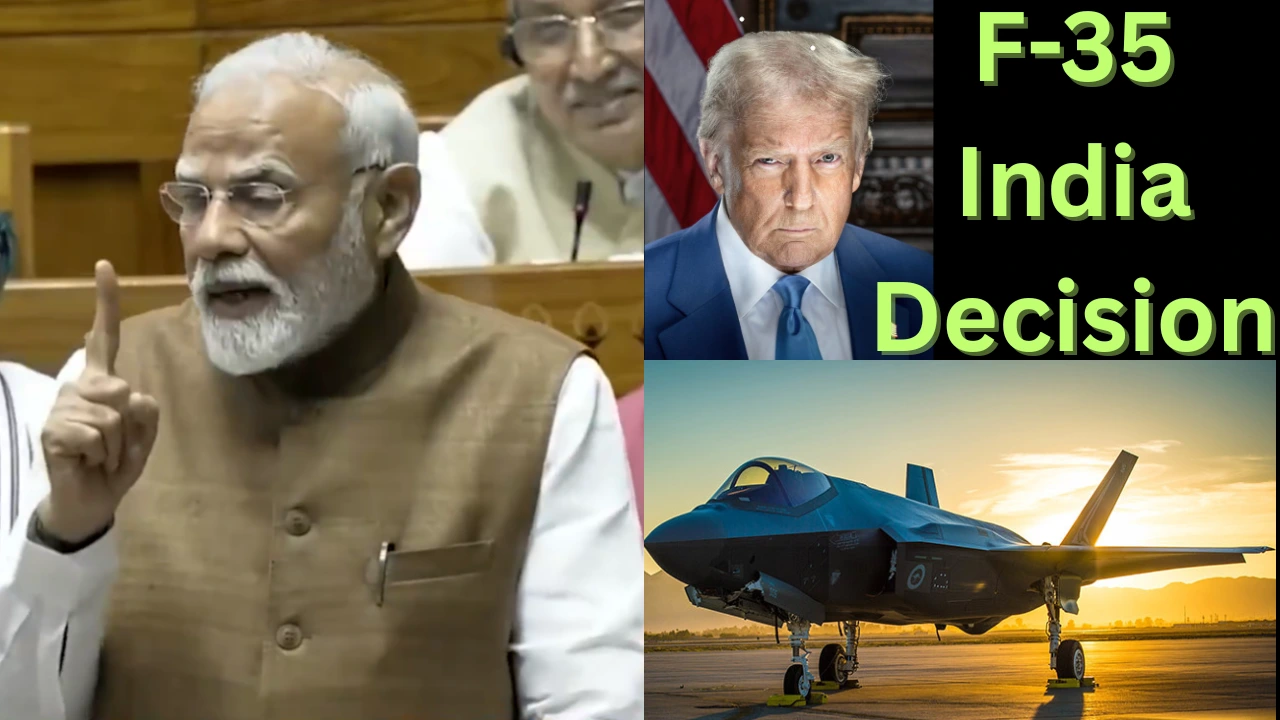
F-35 India decision –India has officially declined the United States’ offer to purchase advanced F-35 stealth fighter jets. This significant decision comes on the heels of President Donald Trump’s abrupt announcement imposing a 25% tariff on Indian goods beginning August 2025. The move has fueled debate over its impact on US defense exports and the long-term implications for Indo-US relations.
Background: Trump’s 25% Tariff Shocks India
President Trump’s new 25% tariff (India US tariffs) on a wide range of Indian exports has sent shockwaves through policy circles in New Delhi. The tariffs, reportedly effective from August 1, 2025, target sectors ranging from textiles to manufactured goods. Indian officials described the announcement as unexpected and “shocking,” leading to immediate reviews and diplomatic consultations.
Related Article- India US tariff latest : Economic Impact Explained By Trump’s 25% Threat
India’s Decision: No F-35s, Focus on Make in India- F-35 India decision
F-35 sale loss -During Prime Minister Narendra Modi’s recent Washington visit, the US strongly pitched the F-35 sale as a pillar of deepening bilateral military ties. However, Indian officials have rejected the offer, opting instead for joint defense production and technology transfer within the Make in India framework. This approach underlines India’s commitment to “Atmanirbhar Bharat” (self-reliant India) and a preference for domestic defense manufacturing over expensive, off-the-shelf arms purchases.
-
India is considering increasing imports of US natural gas, gold, and tech products to balance trade but has excluded new defense deals, including the F-35.
-
The decision signals a shift away from dependency on foreign military hardware and toward indigenous capability development.
F-35 India decision -Impact on the American Defense Industry
F-35 sale loss -The F-35 is one of Lockheed Martin’s marquee export products and losing a potential sale to India – the world’s largest arms importer – is a meaningful setback. For the US defense sector, especially at a time when global competition from European and Asian firms is rising, missing out on such mega deals represents more than just a lost contract:
-
Revenue Loss: The deal, if signed, would have been worth billions in direct sales, supply chain orders, and future upgrades.
-
Market Reputation: India’s rejection could encourage other major buyers to demand more local production – or to turn to rival suppliers offering more flexible terms.
-
Strategic Setback: The move undercuts Washington’s efforts to tightly bond strategic partners with American technology.
-
Domestic Politics: Within the US, defense sector stakeholders may challenge tariff policies that risk lucrative exports.
That said, the decision is not catastrophic. The US remains a top arms exporter, and while the F-35 sale would have been ideal, America still sells a broad range of defense platforms globally.
US-India Trade and Strategic Relations
-
India has ruled out an immediate tit-for-tat retaliation.
-
New Delhi is actively seeking ways to reduce its trade surplus with the US, possibly by expanding American imports but not major defense items.
-
The episode underscores sensitivities around linking trade disputes and security cooperation. Both sides are likely to seek alternative avenues to maintain the strength of their strategic partnership.
FAQs about F-35 India decision
Why did India reject the F-35 fighter jets?
India refused the F-35 offer primarily due to its Make in India initiative and a strategic choice to focus on joint defense production, technological self-reliance, and avoiding expensive off-the-shelf foreign purchases.
Did the US tariffs directly cause the rejection?
India US tariffs -The tariffs accelerated the rejection, but India was already leaning towards indigenous development and technology transfer models rather than high-value imports of advanced fighter jets.
Will this damage US-India defense cooperation?
While the F-35 deal is now off the table, both nations continue to cooperate in areas such as intelligence, space, and defense technology transfers. However, the decision highlights the risk of linking trade measures and security ties.
Is this a big blow to the American defense industry?
It is a significant missed opportunity for US defense manufacturers, given India’s size and procurement plans, but not a crippling loss. Diversification of defense export destinations and a refocus on strategic collaborations may mitigate the effects.
What are the next steps for India?
India may boost imports of US natural gas, gold, and tech products, but is unlikely to pick up new US defense deals in the near future. The focus will stay on Make in India and indigenous capability.