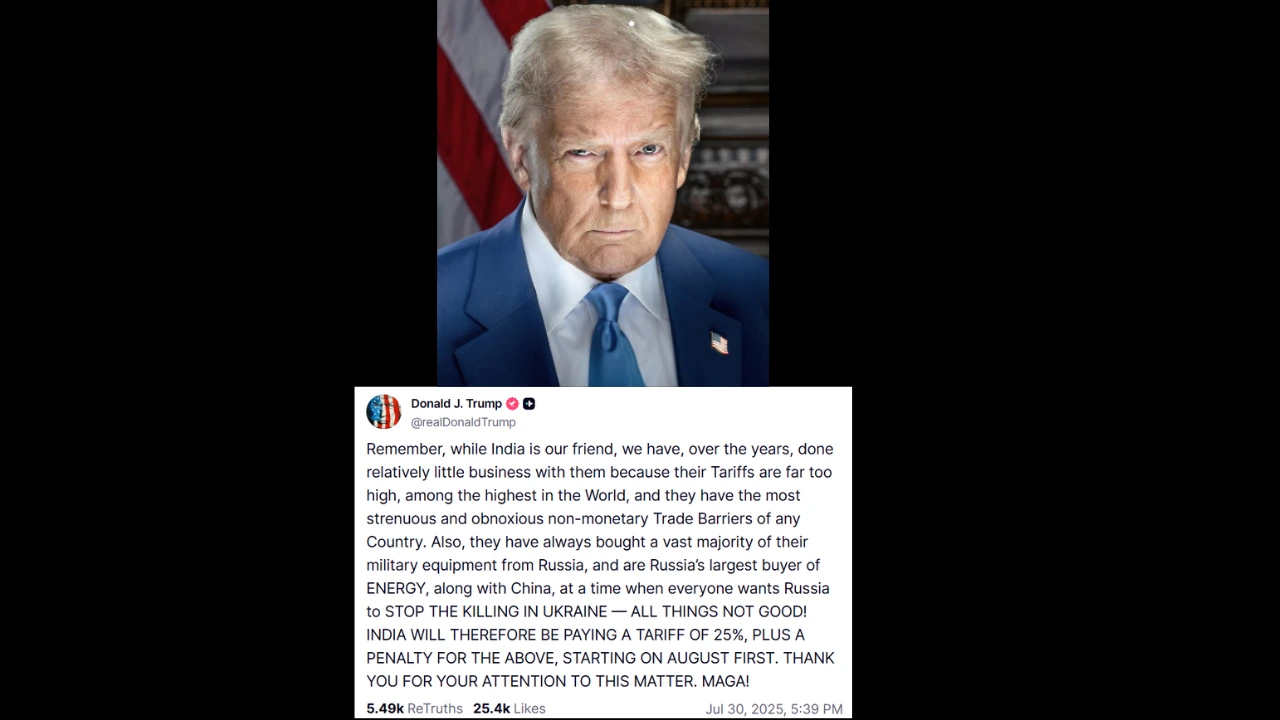
India US tariff latest– In a move that has sent tremors through global markets, US President Donald Trump announced the imposition of a 25% tariff on a wide range of goods imported from India, set to take effect on August 1, 2025. The decision, which also includes an unspecified “penalty,” comes after months of stalled trade negotiations and has been justified by the White House as a response to India’s own high tariffs and its continued trade relationship with Russia. This aggressive trade policy has raised alarms across Indian industries and sparked concerns about a significant economic fallout for one of the world’s fastest-growing economies.
Related Article- New Delhi Taking Steps to Counter US tariff impact India
The Economic Fallout for India-Impact of US tariff on Indian Economy
The immediate and most significant impact of these tariffs will be felt in India’s export sector and its overall Gross Domestic Product (GDP). Experts warn that a blanket 25% tariff could deliver a substantial blow to the Indian economy. Projections indicate a potential impact of over $30 billion, which would equate to approximately 0.7% of India’s GDP, which is estimated to reach $4.3 trillion by the end of 2025.
An analysis by the State Bank of India (SBI) suggests that even a 20% tariff could shave off as much as 50 basis points (0.5%) from India’s GDP, implying a more severe drag from a 25% levy. The study also highlights a direct correlation between tariff hikes and export decline, estimating that a 1% increase in tariffs could lead to a 0.5% drop in export volumes. With India’s goods exports to the U.S. valued at around $87 billion in 2024, the repercussions of this tariff could be widespread and damaging.
Key Sectors Under Threat- Trump tariff impact
While the tariff is expected to be broad-based, certain Indian industries are particularly vulnerable due to their high export dependence on the US market. These sectors include:
-
Electronics: This sector has been a key component of India’s export growth, and a 25% tariff could make Indian electronic goods significantly less competitive in the US market.
-
Apparel and Textiles: A major employer in India, the textile and apparel industry relies heavily on exports to the US. Higher tariffs will likely lead to a sharp decline in orders, impacting millions of jobs.
-
Seafood: The US is a major market for Indian seafood. The new tariff will increase the cost for American consumers, potentially leading them to seek alternatives from other countries.
-
Gems and Jewelry: Another significant export category, gems and jewelry will face stiffer competition from other global suppliers not subject to such high tariffs.
The ripple effect of these tariffs will not be limited to large corporations. Small and medium-sized enterprises (SMEs), which form the backbone of these export-oriented sectors, will be disproportionately affected. Many of these smaller businesses lack the financial cushion to absorb the increased costs and may be forced to scale back operations or shut down entirely.
The Rationale Behind the Tariffs- US-India trade news
President Trump has been vocal about his reasons for imposing these tariffs. In a statement on his social media platform, Truth Social, he referred to India as a “friend” but criticized its trade practices, claiming that India imposes some of the “highest tariffs in the world” and has “the most strenuous and obnoxious non-monetary trade barriers”.
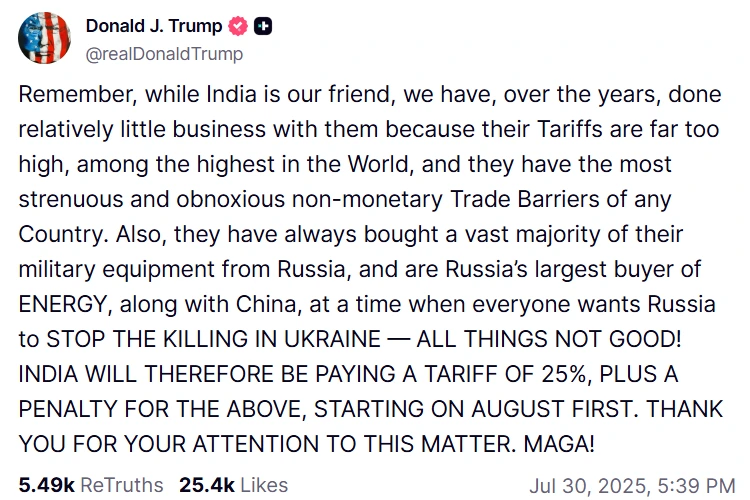
The primary catalyst for the tariff announcement appears to be the breakdown of trade talks, which have been deadlocked over several key issues, particularly India’s reluctance to open up its agriculture and dairy sectors to US imports.
Furthermore, the Trump administration has cited India’s continued economic and military ties with Russia as a key factor. Trump pointed to India’s significant purchases of Russian military equipment and its position as Russia’s largest buyer of energy, alongside China, as a point of contention, especially in the context of the ongoing conflict in Ukraine. The additional “penalty” mentioned in the announcement is believed to be directly linked to these Russian dealings.
India’s Response and Potential Retaliation
The Indian government has responded with a measured but firm stance. The Centre stated that it “has taken note” of the announcement and will “take all steps to secure the national interest”. A delegation led by Commerce Minister Piyush Goyal is expected to visit Washington to continue negotiations, indicating that diplomatic channels remain open.
However, there is also the possibility of retaliatory tariffs from India. If diplomatic efforts fail, India may choose to impose its own tariffs on US goods, targeting key American exports such as almonds, apples, and other agricultural products. Such a move would escalate the trade dispute into a full-blown trade war, with negative consequences for both economies.
Some economists in India have suggested that the country’s relatively low reliance on US exports (around 2.2% of GDP) might cushion the overall blow. Nevertheless, the disruption to supply chains and the increased uncertainty for businesses cannot be understated.
Broader Implications for Global Trade
This trade standoff between the world’s oldest and largest democracies has broader implications for the global economic order. It signals a continuation of the protectionist trade policies championed by the Trump administration, which prioritize bilateral deals and “reciprocal” trade over multilateral agreements.
The “my way or the highway” approach, as some experts have described it, poses a threat to the rules-based global trade system that has been in place for decades5. It could encourage other countries to adopt similar protectionist measures, leading to a more fragmented and less predictable global trade environment. The dispute also highlights the growing complexities of geopolitical alliances, where economic interests and strategic partnerships can often come into conflict.
As the August 1 deadline approaches, the world will be watching closely to see if a last-minute deal can be reached. The outcome of these negotiations will not only determine the future of US-India trade relations but could also set a precedent for how major global powers navigate their economic differences in an increasingly uncertain world.
Read Also –Toyota’s Hino Motors Settles U.S. Emissions Fraud for $1.6 Billion
Frequently Asked Questions (FAQs)
What is the new tariff rate on Indian goods?
The United States has announced a 25% tariff on a wide range of goods imported from India1. There is also mention of an additional, unspecified “penalty”.
When will the new tariff take effect?
The new tariffs are scheduled to be implemented on August 1, 2025.
Why did the US impose these tariffs on India?
The stated reasons include India’s high tariffs on US products, non-monetary trade barriers, and its continued purchase of Russian oil and military hardware. The tariffs were announced after trade talks between the two nations stalled.
Which Indian sectors will be most affected?
Sectors with high export volumes to the US are most at risk. These include electronics, apparel and textiles, seafood, and gems and jewelry.
What is the potential impact on India’s economy?
Economists estimate that the tariffs could cost the Indian economy over $30 billion, potentially reducing its GDP by 0.5% to 0.7%.
How is the Indian government responding?
The Indian government has stated it will take all necessary steps to protect its national interest and is continuing to engage in diplomatic talks with the US.
3 thoughts on “India US tariff latest : Economic Impact Explained By Trump’s 25% Threat”