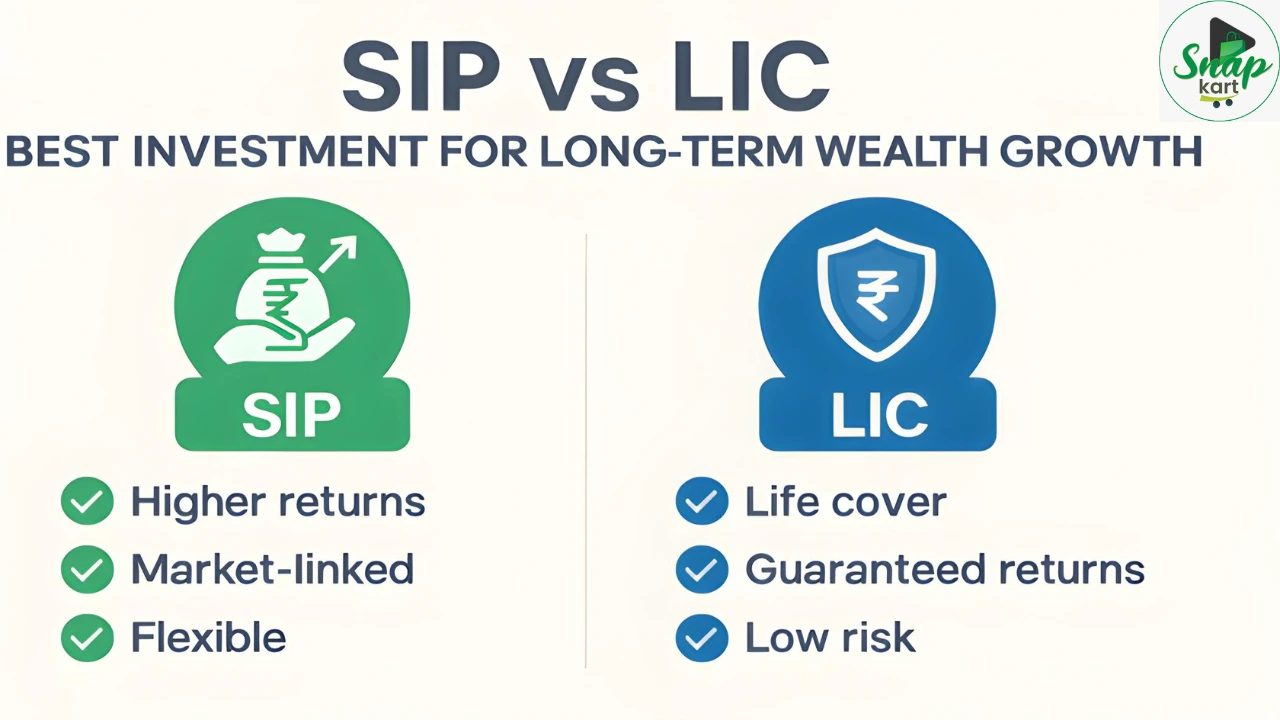
SIP vs LIC (Mutual funds vs LIC policies)– Choosing the right investment vehicle is one of the most crucial tasks for anyone looking to secure their financial future. In India, two of the most debated options are the Systematic Investment Plan (SIP) and Life Insurance Corporation (LIC) policies. While both have loyal followings, they serve different purposes and cater to unique financial goals. In this article, you’ll discover the features, benefits, risks, and suitability of each to help you make an informed decision.
Best investment for wealth creation India
What is SIP?

A Systematic Investment Plan (SIP) is an investment strategy wherein you deposit a fixed sum at regular intervals (usually monthly) into a mutual fund scheme. SIPs are celebrated for their wealth-building potential, flexibility, and ability to average investment costs over time. This disciplined approach leverages the power of compounding, making it an ideal option for long-term financial planning and goal-based investing.
What is LIC?

Life Insurance Corporation (LIC) is India’s largest and oldest government-backed insurance provider. LIC policies primarily focus on providing life insurance cover, along with the potential for savings or modest returns in some plans. LIC’s primary appeal lies in its promise of financial protection for your dependents in case of unforeseen events. However, it also offers a variety of products that combine savings and investment, such as endowment and ULIP plans.
SIP vs LIC: Key Differences
| Feature | SIP (Systematic Investment Plan) | LIC (Life Insurance Corporation) |
|---|---|---|
| Purpose | Wealth creation through regular investment in Mutual Funds | Financial protection through life coverage (with some savings/investment plans) |
| Returns | Market-linked (typically 12–18% for equity funds over long term) | Guaranteed but lower (about 4–6.5%, up to ~9.5% for select policies) |
| Risk | Moderate to high (market-dependent) | Low to minimal (guaranteed by LIC/Government) |
| Liquidity | High (easy redemption and withdrawal) | Low (penalties or loss of benefits on early withdrawal) |
| Flexibility | Highly flexible (start, stop, increase, or decrease anytime) | Rigid commitment; fixed premium payment term |
| Tax Benefits | Section 80C for Equity Linked Savings Schemes (ELSS funds only, with 3-year lock-in) | Section 80C on premiums paid; maturity/death proceeds often tax-free under Section 10(10D) |
| Life Cover | None | Yes (main benefit; sum assured to nominee) |
| Ideal For | Long-term wealth building, goal-based investors | Security-first investors, those seeking guaranteed returns |
SIP returns vs LIC returns
Investment Growth Potential
-
SIPs: Historically, SIPs in equity mutual funds have delivered returns averaging between 12% and 18% annually over the long term. This growth is due to regular investment, rupee cost averaging, and the compounding effect.
-
LIC: Traditional LIC plans (such as endowment policies) typically offer a return in the 4–6.5% range, with some specialized plans like select endowments reaching up to 9.5%. However, these figures are gross—not net of inflation. The main feature remains insurance coverage, not investment appreciation.
Risk Profile
-
SIP: Market risk is a factor since SIPs are subject to equity or debt market fluctuations. However, risk is mitigated through diversification (mutual funds invest in a variety of stocks/bonds) and rupee cost averaging. Over long terms (10-20 years), volatility tends to normalize, favoring disciplined investors.
-
LIC: Risk is minimal as LIC policies guarantee returns and the sum assured. The government backing further boosts investor trust. However, the trade-off for low risk is modest returns.
Liquidity and Flexibility
-
SIP: You can pause, increase, decrease, or withdraw investments at any time (except for tax-saving ELSS funds, which have a lock-in). This flexibility makes SIP suitable for changing financial situations and emergencies.
-
LIC: Most policies require long-term commitment (minimum 10–15 years). Early surrender leads to penalties or reduced benefits. Loans can be availed against some policies, but overall flexibility is lower.
Taxation
-
SIP: Only tax-saving mutual funds (ELSS) provide Section 80C benefits, with returns taxed as per capital gains tax rules. SIPs in non-ELSS schemes don’t offer direct tax deductions.
-
LIC: Premiums paid are eligible for deduction under Section 80C, and most maturity amounts are tax-free under Section 10(10D), making LIC attractive for tax planning.
Real-World Return Comparison
Example: Investment of ₹5,000/month for 20 years
| Parameter | LIC Endowment Plan (9.5%) | SIP in Equity Fund (12%) |
|---|---|---|
| Total Investment | ₹12,00,000 | ₹12,00,000 |
| Maturity Amount (approx.) | ₹32.8 lakhs | ₹50.9 lakhs |
| Risk Level | Low | Moderate to High |
| Liquidity | Low | High |
| Purpose | Insurance + Savings | Long-Term Wealth Creation |
Splitting your investment between both (such as ₹10,000 per month in each over 15 years) can result in balanced growth (security from LIC, growth from SIP).
Related- LIC Premium Calculator- Simplifying Your Curiosity
Suitability: Who Should Choose What?
-
SIP is ideal for you if:
-
Your primary goal is long-term wealth creation.
-
You are comfortable with moderate market risk.
-
You want flexibility and liquidity.
-
Your investment horizon is 5 years or more.
-
-
LIC is suitable if:
-
You value security and guaranteed returns.
-
Your main aim is financial protection for your family.
-
You have a low risk appetite.
-
Tax savings and long-term disciplined savings matter most.
-
Some experts recommend a balanced approach: combine LIC for insurance needs and SIP for wealth creation.
Pros and Cons at a Glance
| Aspect | SIP | LIC |
|---|---|---|
| Returns | Higher, market-linked | Lower, guaranteed |
| Life Cover | No | Yes |
| Flexibility | High | Low |
| Liquidity | High | Low |
| Risk | Moderate to High | Low |
| Tax | Only ELSS, with lock-in; others are taxed | Premiums deductible, maturity often tax-free |
Frequently Asked Questions about SIP vs LIC (FAQs)
1. Can SIP replace LIC for life insurance?
No. SIPs do not offer insurance. They only build wealth. For life cover, you must buy a term plan or an LIC policy.
2. Do LIC policies give better returns than SIPs?
Typically, no. SIPs in equity funds have historically delivered higher long-term returns. LIC policies focus on safety and insurance, sacrificing growth potential.
3. Is it possible to invest in both LIC and SIP?
Yes. Combining both helps balance wealth creation and financial protection. Many financial advisors recommend keeping insurance and investments separate for better clarity and effectiveness.
4. Which option offers better tax benefits?
LIC generally provides clearer, more accessible tax benefits under Section 80C and Section 10(10D). SIPs (ELSS funds) also qualify for Section 80C deductions but have a 3-year lock-in period.
5. What if I have a low risk appetite?
Choose LIC for guaranteed returns and insurance security. Opt for debt mutual fund SIPs if you still want some growth but with lower risk than equities.
Conclusion
The choice between SIP and LIC is highly personal—driven by your goals, risk tolerance, and need for flexibility or security. For maximum financial health, consider using LIC for insurance coverage and SIP for long-term investments. This dual approach ensures your family is protected and your wealth grows faster than inflation.
Disclaimer-This is informational Article, Make informed decisions by regularly reviewing your investment strategy and consulting with a qualified financial advisor.